
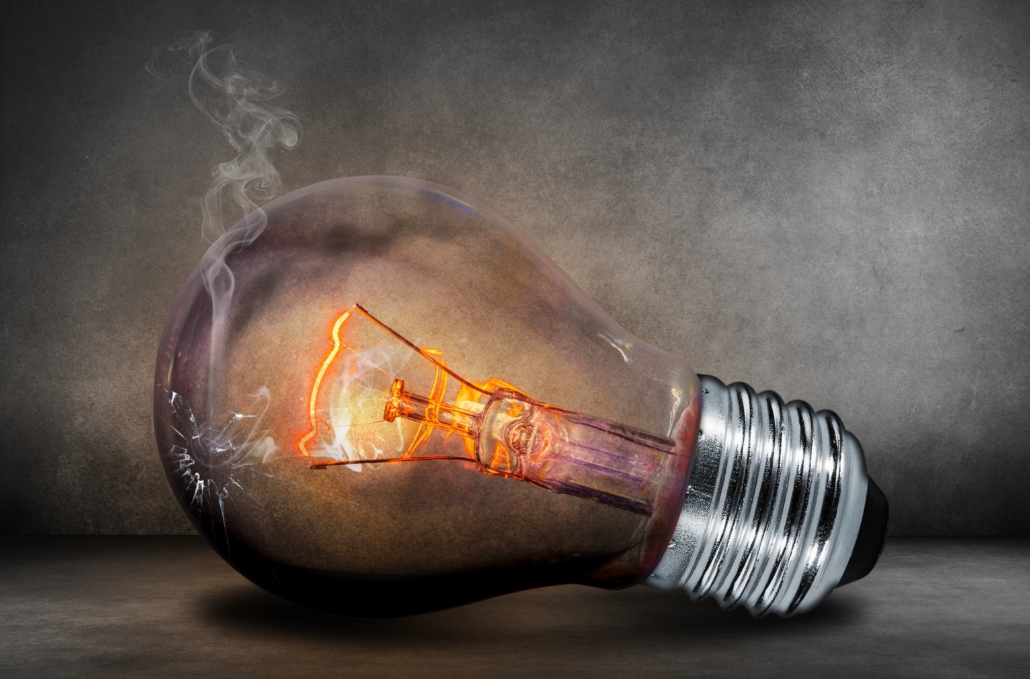
Stress and burnout are two terms that people often use interchangeably. Either that or they become so irrevocably intertwined that they get confused with one another.
Plus, if you do find yourself close to the edge, feeling overwhelmed or exhausted, or struggling to cope, you might very well describe yourself as one, or the other or, even, both. But they are not the same thing.
Understanding the difference matters. Not because you get to put a label on it. As fun as that sounds. It’s more because the way you respond to stress will need to change, especially if you’re slip sliding your way towards burnout.
What is stress?
Stress is a natural response to pressure. But you can experience both good and bad stress.
Good stress is called ‘eustress.’ The ‘eu’ prefix literally means good. Think of the happy stress that comes with getting married, becoming parents or, even, planning a holiday. Plus, if you work in a demanding environment but thrive and rise to the challenge, the pressure you feel there will also be of the good kind.
Bad stress is called ‘distress’. The word has its origins in Latin and carries the sense of being constrained or placed under pressure. The ‘di‘ prefix can also mean ‘twice the.’
Distress occurs when we feel that the demands placed upon us exceed, or have exceeded, our ability to cope. It can also arise when we face something that feels threatening, difficult or uncertain. Think of the same work pressure as above. Only it’s constant. And you don’t feel that you are thriving or rising but sinking and shrinking away.
Good stress is useful. It can motivate us to meet a deadline, prepare for an important presentation or deal with a challenging situation. The trouble tends to arise when the pressure becomes excessive, prolonged or difficult to manage.
Stress itself isn’t a diagnosis. You can be angry and stressed, for a start. Or anxious and stressed, or depressed. Stress can sometimes contribute to drink and drug problems. Insomnia is often stress-related. Irritable bowel syndrome (IBS) can also be exacerbated by stress.
Stress can be unpleasant, but it doesn’t necessarily mean that you’re burned out. If the pressure eases, you may find that you recover relatively quickly.
The problem is that many of us don’t give ourselves much opportunity to recover. We carry on regardless, telling ourselves that we just need to get through this week, this project or this particularly demanding period.
Sometimes the problem isn’t you, but the environment you find yourself in. One that doesn’t let up, even for a day, let alone a week. If you don’t stop, stress can become chronic. And if you still don’t stop, then the other thing can come along.
What is burnout?
Burnout is generally associated with prolonged, unmanaged stress, particularly in the workplace. It isn’t simply a case of being tired after a busy week or needing a decent night’s sleep.
The World Health Organization describes burnout as an occupational phenomenon resulting from chronic workplace stress that has not been successfully managed. It identifies three main characteristics:
- Feelings of exhaustion or depletion.
- Increased mental distance from your job, or feelings of negativity or cynicism towards it.
- Reduced professional effectiveness.
However, recent research from Norway, Sweden and America suggests that burnout isn’t necessarily just a workplace thing. Your personal life, if challenging and relentless enough, can also lead to it. I wrote about this in my column for Psychology Today.
In everyday terms, burnout can leave you feeling emotionally and physically depleted. You might find that work (or aspects of your life) which once interested you now feel pointless. You might also feel increasingly detached from colleagues, clients, family, friends and your responsibilities. Carer burnout, for instance, is being recognised as A Thing.
You may also feel that you’re no longer performing as well as you used to. Tasks that you previously found straightforward now seem disproportionately difficult, and even small demands may feel overwhelming.
The thing is that burnout doesn’t always announce itself dramatically. Sometimes it can feel like your personal fuse box just went ‘bang!’ But often it develops gradually, with you becoming so accustomed to feeling exhausted and under pressure that you don’t fully appreciate how much things have changed.
So, what is the difference?
There are some useful distinctions, although the experiences can overlap.
When you’re stressed, you feel that you have too much to do. You fear losing it if things don’t change. When you’re burned out, it’s gone. You’ve lost it. You no longer have the care, the energy or the motivation to do any of it.
Stress can leave you feeling anxious, agitated and preoccupied with your responsibilities (back to anger and anxiety). Burnout involves a sense of emotional exhaustion, detachment or apathy. It can feel like depression, but it isn’t the same thing.
With stress, you can still care deeply about getting something done. With burnout, you may find that you struggle to care at all.
Burnout isn’t exclusively about the number of hours you work or the amount of stuff you’ve got going on in your personal life. Your beliefs, expectations and the way you respond to pressure can also play a part.
For example, if you believe that you must always perform well, never make mistakes or continually prove your worth, you may find it difficult to give yourself permission to rest. You can end up placing yourself under considerable pressure, even when nobody else is demanding quite so much of you.
More than a few of my burnout clients have burnt themselves out that way. Some had management teams literally begging them to stop and take time out.
What can you do if you’re experiencing stress or burnout?
The first step is to take your experience seriously rather than dismissing it as something you simply need to push through.
If you’re stressed, it may help to look at the demands you’re facing, identify what you can realistically change and make time for recovery. This might involve setting boundaries, taking breaks, taking time out, getting adequate sleep or asking for support. Burnout prevention works in pretty much the same way.
If you’re experiencing burnout, recovery may require a more substantial change. Continuing to work harder in the hope that you’ll somehow get back to normal isn’t going to cut the recuperative mustard. You may need to reconsider your workload, your working environment and the expectations you place upon yourself.
What can help?
Psychotherapy and/or coaching can also help you explore the thinking patterns that contribute to stress and burnout. Approaches such as Cognitive Behavioural Therapy (CBT) and Rational Emotive Behaviour Therapy (REBT) can help you recognise and challenge unhelpful beliefs, including the demands you make of yourself and the ways you judge your own performance.
Hypnotherapy is also a great tool, not only for stress management but also for burnout recovery and prevention. There’s more research into hypnotherapy for stress than there is for burnout, but that’s only because burnout is the new kid on the ‘doing too much’ block.
Final thoughts
Of course, not every experience of exhaustion or emotional detachment is burnout. Depression and other health conditions can produce similar symptoms, so if you’re struggling persistently, it’s worth speaking to a healthcare professional.
The important thing is not to wait until you’re completely exhausted before doing something about it.
Stress is rarely a sign that you’re failing to cope. It’s more an indication that you’re doing too much, too often. So, if the pressure is ongoing and you’re finding it increasingly difficult to recover, it may be time to look more closely at what’s happening.
You don’t have to wait until you reach breaking point to make a change. As the saying goes, “an ounce of prevention is worth a pound of cure.”
And that is advice that HR departments as well as individuals could do well to remember.
Want to know more?
I help high-functioning professionals manage anxiety, stress, and burnout through evidence-based psychology, clinical hypnotherapy, and coaching. I offer a free 15-minute consultation online for those that need, or think they need help.